
A guide to clamp drains
Clamp drains, explained
A clamp drain is a floor drain with a mechanical clamp that locks the floor covering to the drain body. It is the usual way to finish sheet vinyl and safety flooring at a shower drain. This guide explains how the clamp works, why it matters, and what to look for when you choose one.
The drains shown are sold and delivered by Wetrooms Design.
How it works
Three parts, held together by pressure
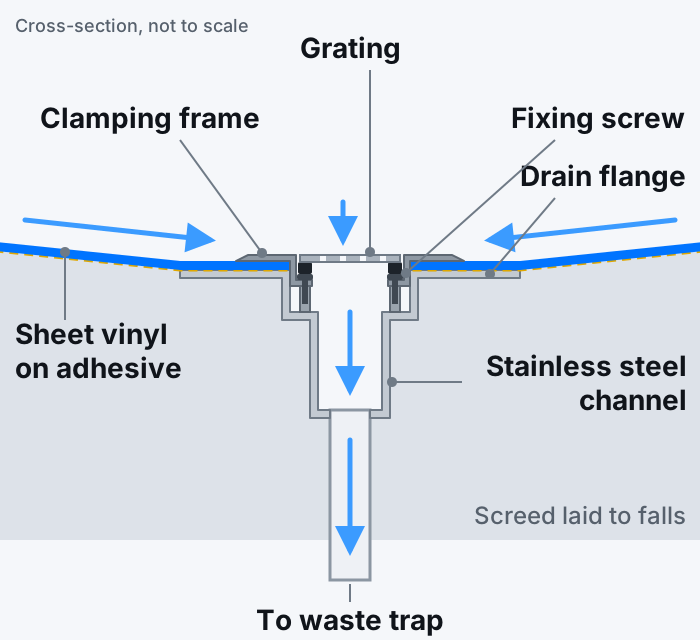
Every clamp drain joins three things: the drain body, the floor covering and a clamping component.
The drain body has a flange around its opening. The vinyl is bonded to that flange and cut back to the inner edge of the drain. The clamping component, a ring on a point drain or a rectangular frame on a linear drain, then goes on top of the vinyl and is screwed down into the drain body.
As the screws are tightened, the vinyl is pressed evenly between the frame and the flange. The cut edge, the most exposed part of the whole floor, is held flat and sealed by the clamp instead of depending on adhesive alone.
The connection
How the vinyl is locked to the drain
The general sequence on a linear clamp drain. Always follow the fitting instructions for the drain you are using.
-
Bond to the flange
With the drain set flush in the floor and the falls formed, the area around the drain is sealed with an adhesive specified by the drain maker, and the rest of the floor is glued as normal.
-
Lay and cut the sheet
The vinyl is rolled out over the drain, softened with a heat gun and cut along the inside edge of the channel.
-
Clamp it down
The clamping frame is placed over the vinyl and the screws are tightened evenly, pressing the edge against the flange.
-
Fit the grating
The grating goes into the frame. The screws are hidden under it and only the slim frame shows; the grating lifts out for cleaning.
Clamp or glue
What the clamp adds
Adhesive still matters: it bonds the vinyl to the floor and to the drain. The clamp adds a mechanical hold at the one place the sheet is cut.
| Compared | Glued edge only | Glued and clamped edge |
|---|---|---|
| What holds the edge | The adhesive bond alone | The adhesive, plus a steel frame screwed down on top |
| If the bond weakens | The cut edge can start to lift | The frame keeps pressing the edge down |
| The cut edge | Exposed at the drain opening | Covered by the frame |
| Depends most on | Surface preparation and the adhesive | Tightening the clamp evenly on a sound bond |
Types
Linear or point?
The principle is the same; the shape changes.
- Point clamp drains have a round or square opening with a clamping ring around it. The floor falls towards a single point.
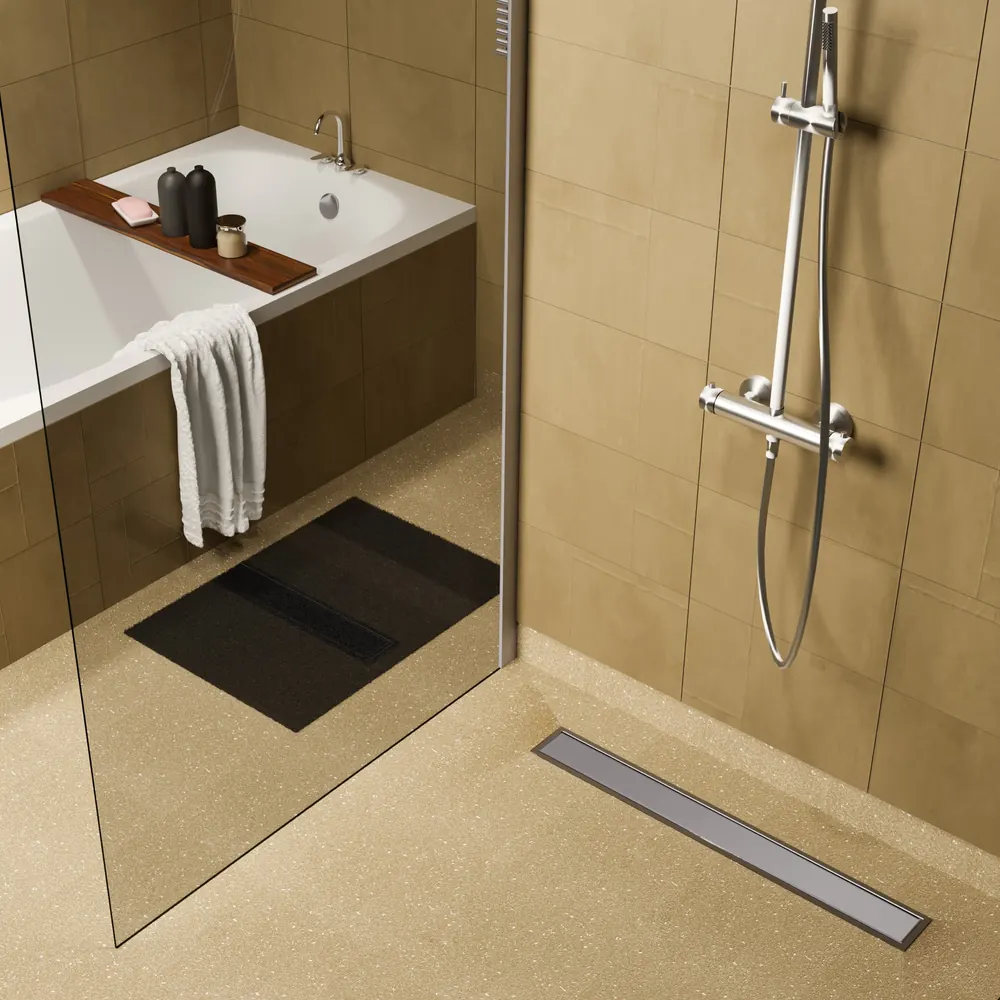
- Linear clamp drains have a long channel with a rectangular clamping frame around it. The floor can fall in one direction towards the channel, which makes the falls simpler to form and suits level-access showers.
Which is right depends on the room, the drainage layout and the look you want.
Choosing one
What to check before you buy
Six things that decide whether a clamp drain suits your floor.
- Your floor covering. Check that the drain is made for your type and thickness of vinyl or safety flooring. Do not assume every clamp takes every sheet.
- Material. Look for a stainless steel channel and frame. The grade tells you how it will stand up to water and cleaning products.
- Channel size. Width and height affect both the look and the depth you need in the floor.
- Waste trap and depth. Shallow floors need a low trap; some drains offer several. Check the flow rate against the shower you are fitting.
- Cleaning access. The grating should lift out so the trap can be cleaned from above, without disturbing the floor.
- What comes in the box. A sealing membrane and the right fixings supplied with the drain make the waterproofing joint easier to get right.
An example
The Wiper VF clamp drain
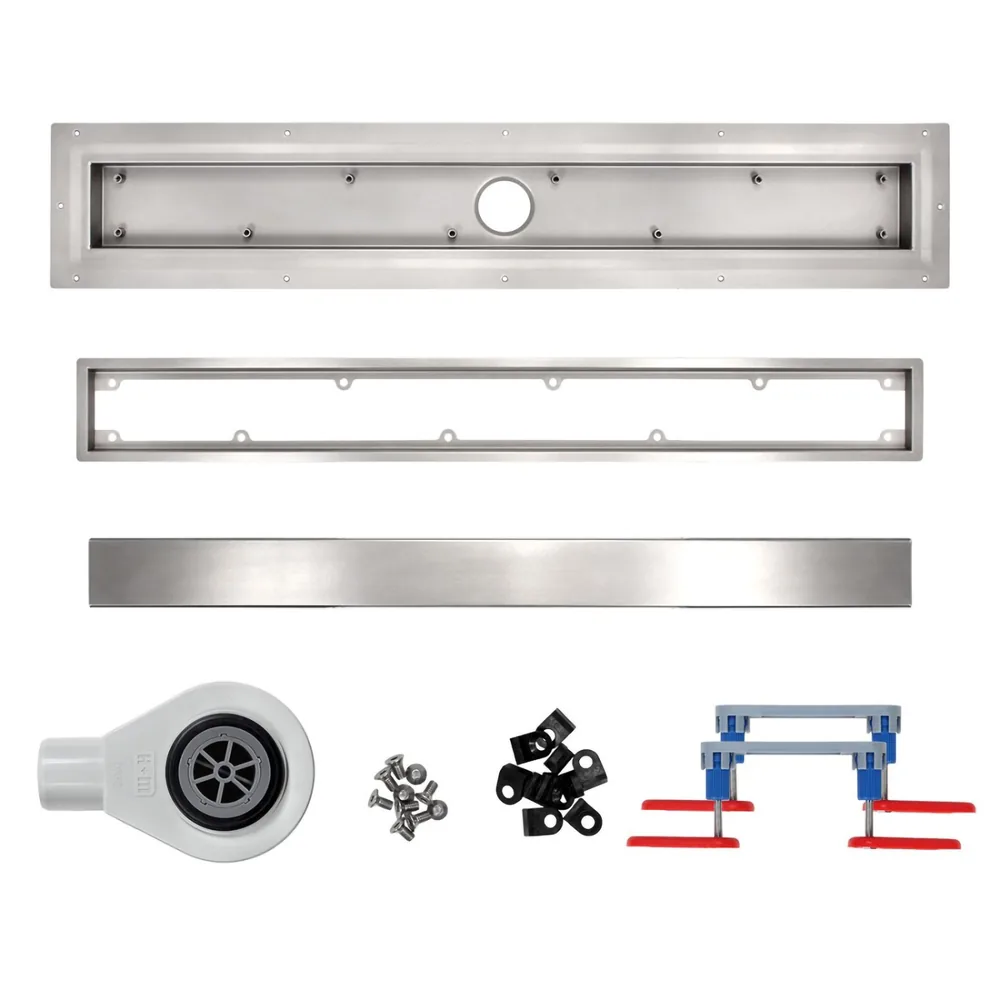
The Wiper VF is a linear clamp drain made for vinyl floors, sold in the UK by Wetrooms Design.
- grade 304 stainless steel channel, 30 mm high and 78 mm wide
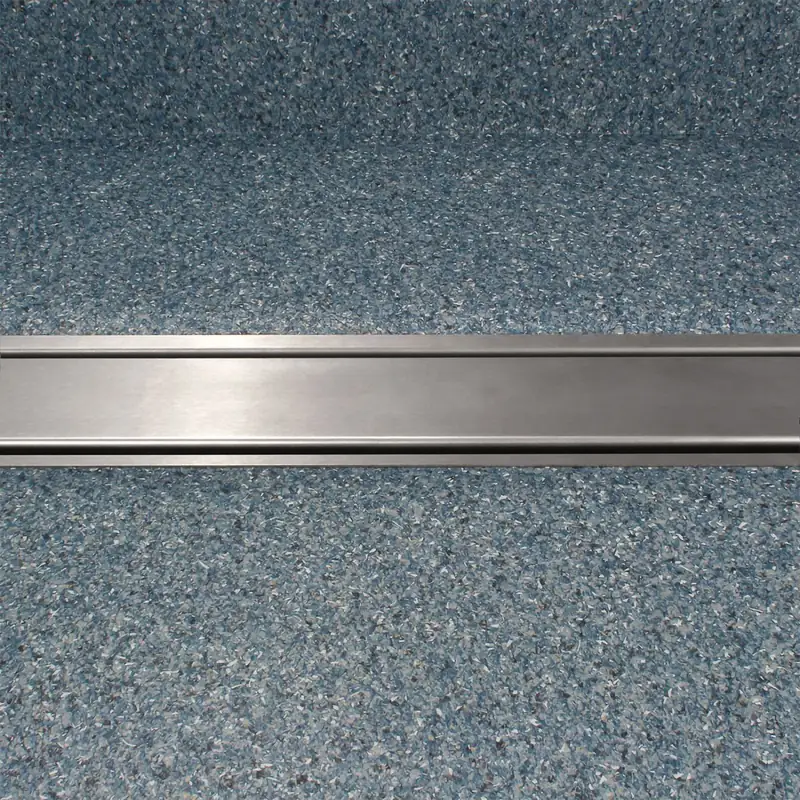
- a clamping frame that seals the vinyl edge and is contoured to reduce wear on it
- lengths from 500 to 1200 mm, with three grate designs
- a choice of six waste traps, down to the 46 mm H+M Snake
- supplied with sealing membrane, lifting hook and fixings, with adjustable legs available
- 10-year manufacturer's guarantee, or 25 years with the Wiper waterproofing kit
It is also built into the Showerlay VF wet room trays, which have the falls cut in at the factory.
FAQ
Clamp drain questions
- What does a clamping ring or frame do?
It presses the floor covering against the drain's flange, so the cut edge around the drain opening is held mechanically instead of by adhesive alone.
- What is the difference between a clamping ring and a clamping frame?
None in principle. A ring is used on round or square point drains; a rectangular frame is used on linear drains, following the shape of the channel.
- Why do vinyl floors need a clamp drain?
Vinyl is laid as a continuous sheet that has to be cut at the drain. A clamp keeps that cut edge flat and sealed, so it does not lift and let water in underneath.
- Can I use a standard tile drain with sheet vinyl?
Do not assume so. A drain designed for tiles may have no way of holding a vinyl edge down. Use a drain whose maker approves it for sheet vinyl, fitted with its clamping frame.
- Does the clamp replace the adhesive?
No. The vinyl is still bonded to the floor and to the drain's flange. The clamp adds a mechanical hold on top of that bond.
- Are clamp drains only for vinyl?
Clamping is also used to secure waterproofing membranes and other flexible layers at drains. What a particular drain can clamp depends on its design, so check with the maker.
- Can a clamp drain go in a timber floor?
Many can. The Wiper VF fitting instructions, for example, show the drain being fitted into a timber floor. Always check the instructions for the drain you choose.
- How far up the wall should the vinyl go?
The Wiper VF instructions ask for at least 100 mm of vinyl on the wall surface. Follow the instructions for your drain and your flooring.